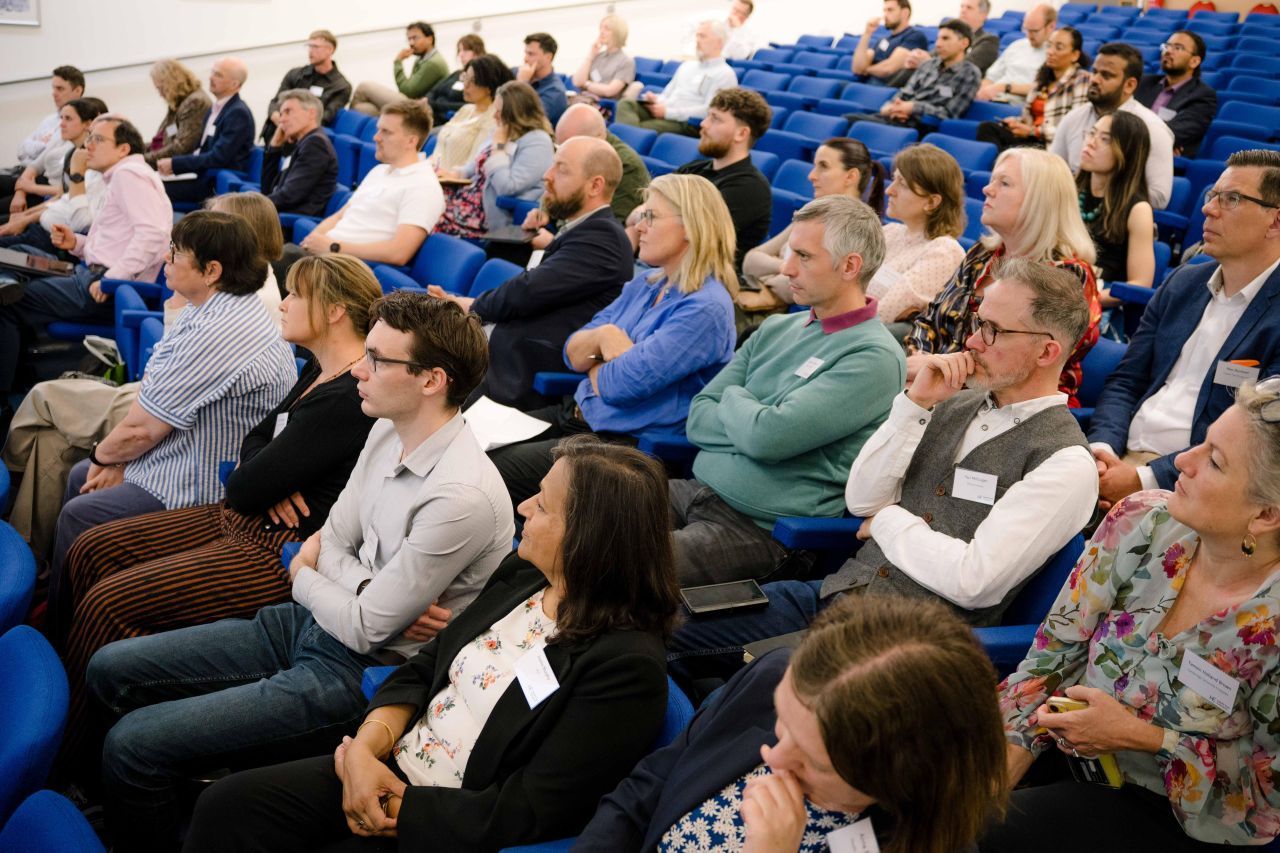
Last Friday I braved the heat and took the train down to London to visit the (thankfully well air conditioned) Barclays Eagle Labs space near Old Street.
I was there for the Nexus Women's Health Collective startup showcase, and I came away genuinely impressed. Not just by the founders, but by the sheer scale of the problem they're all trying to solve.
The problem is bigger than most people realise
Women spend around 25% more of their lives in poor health than men. That gap isn't inevitable — it's largely the result of decades of underinvestment in research and clinical trials that historically treated the male body as the default. Conditions like endometriosis, PCOS, pelvic floor dysfunction and postnatal complications are either underfunded, under-studied, or both.
What is the Nexus Women's Health Collective?
The Nexus programme is a nine-month, zero-cost accelerator for women's health companies, run in partnership with Barclays. Thirty founders are selected per cohort, and they get access to mentors, fractional CFO support, investor introductions and a pitch final at the end. The showcase I attended was the kick-off day for this cohort, where each founder had a few minutes to explain who they are, what they're building, and what they need from the room.
The day was structured around the pitches, but the talks sandwiched between them were just as valuable. Bianca Errigo (founder of HumanOS) opened the expert sessions with a refreshingly honest look at raising investment while avoiding burnout — not the most obvious pairing, but probably the most practical one for founders in a room like that. Kiki Patel of Onteigo followed with a session on data protection and surviving due diligence, which is exactly the kind of thing that catches early-stage health companies off guard. After lunch, Dr Antoinette Cameron-Pimblett from the London Institute for Healthcare Engineering explained what LIHE can offer startups as a bridge between academic research and commercial development.
The standout for me was Frances Conti-Ramsden, an obstetrician and data scientist (and CMO of Megi AI) who spoke just after lunch on AI in women's health. Her message was essentially: the technology is promising, but only as good as the data it's trained on — and right now that data has some serious gaps. If women have been underrepresented in clinical research for decades, those biases don't disappear just because you've built a clever algorithm on top of them. I’m sure it was a useful reality check for lots of people in the room.
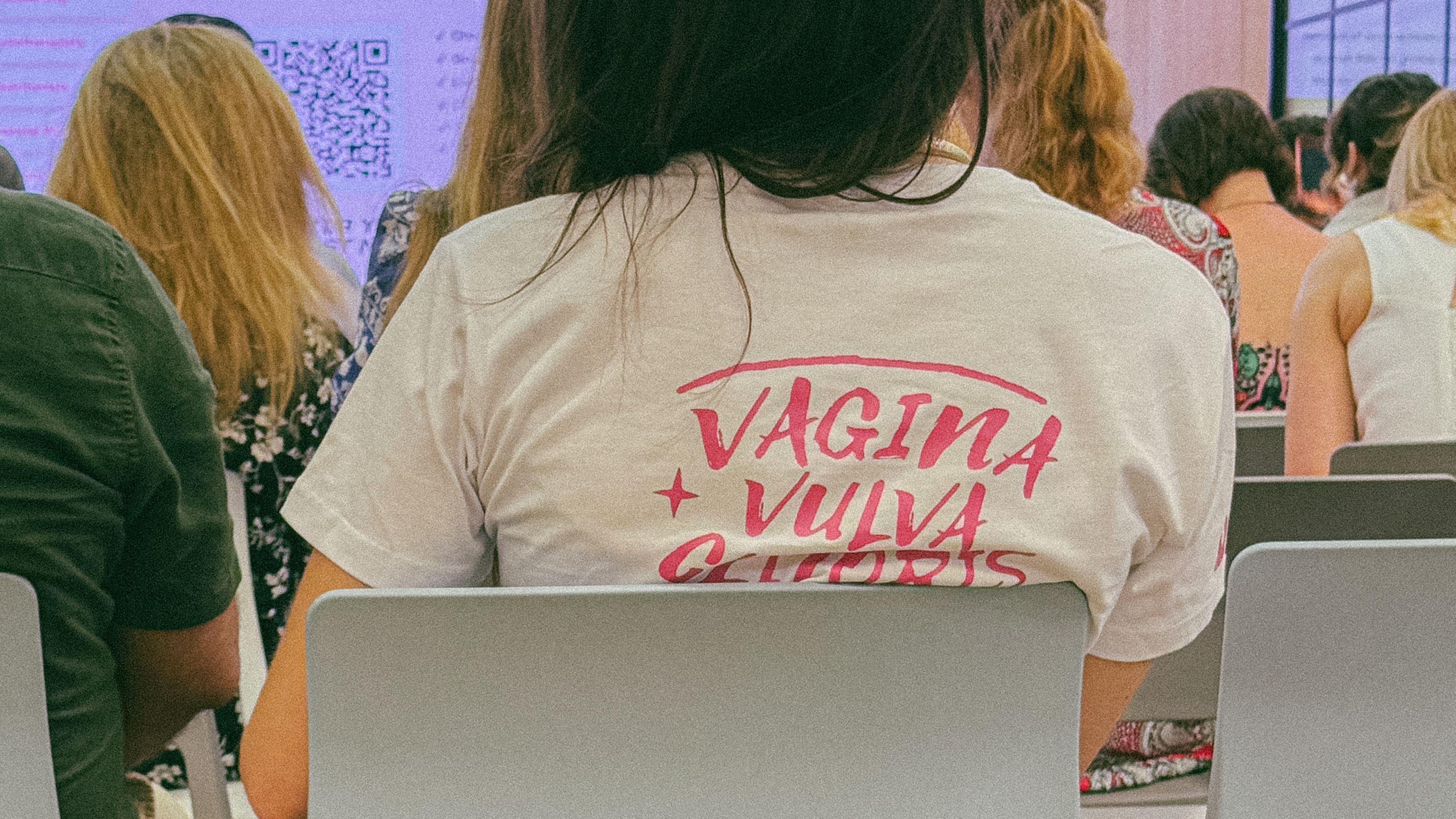
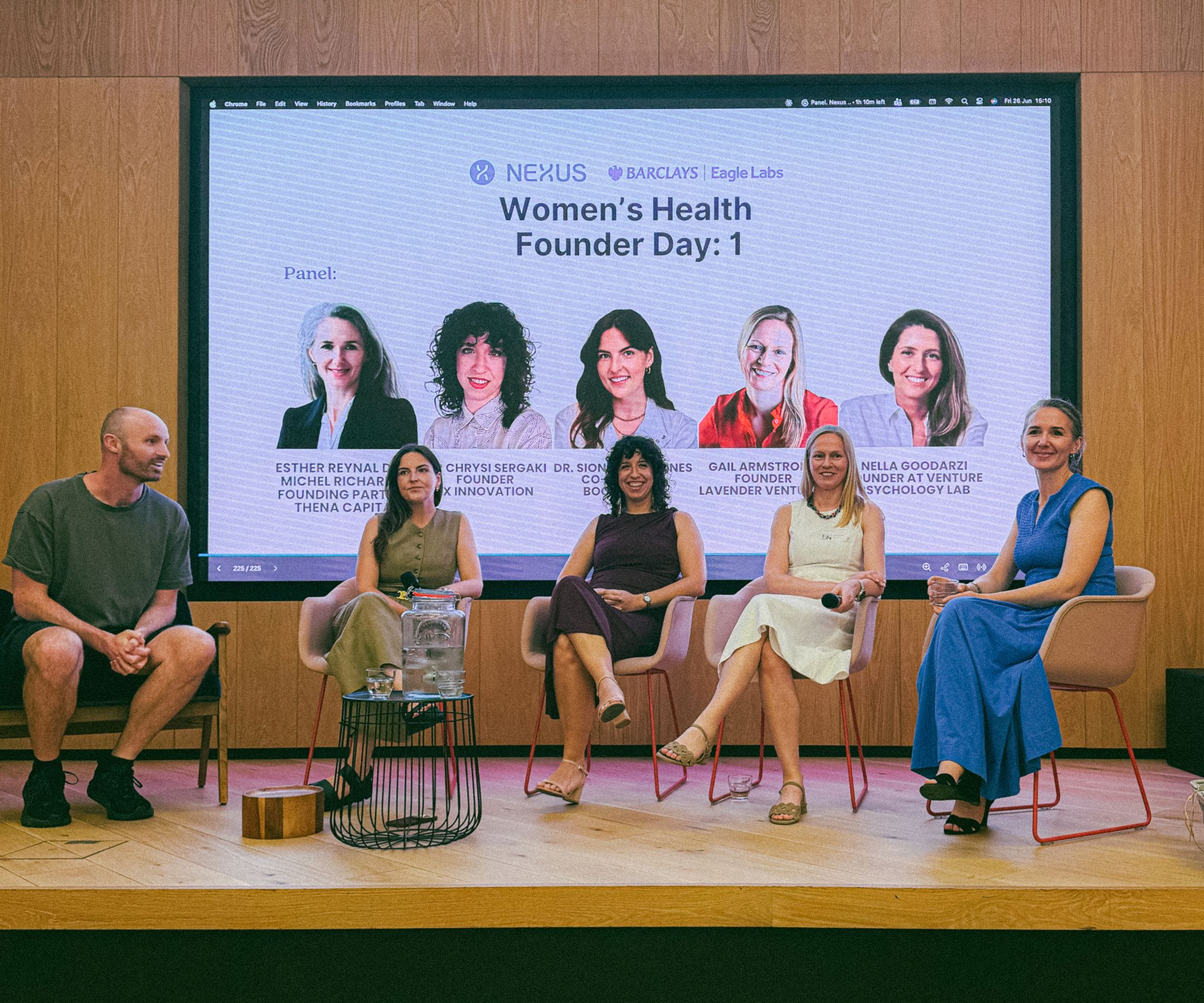
The day closed with an investor panel that brought together five investors and advisors including Esther Reynal de St Michel Richardot (THENA Capital), Gail Armstrong (Lavender Ventures) and Dr Sioned Fôn Jones (BoobyBiome). The conversation got into territory that clearly resonated with the room: what investors are actually looking for, and the perennial question of whether to go after the NHS or head straight for the US market. There are no easy answers there, but hearing it thrashed out by people who've been on both sides of the table was genuinely useful.
Where ThreeTenSeven comes in
We're big believers that good branding and design isn't a luxury add-on for early-stage health companies — it's fundamental to success. How you communicate your idea shapes how investors, partners and patients receive it. We also believe in supporting great causes and being able to help improve women’s health outcomes as much as we can. So we donated £25,000 worth of branding and design time to the winner of the showcase, to be chosen on the day.
What was on show
Fourteen companies pitched across the day, covering everything from postnatal care to STI testing to fertility therapeutics. A few that stood out:
Hesta Health (Amanda Cupples) is tackling the cliff-edge that new mothers fall off after birth, when clinical support essentially disappears right when it's needed most. Their platform combines blood testing, a multidisciplinary care team and an always-on clinical Q&A service, all focused on the two years post-birth.
Peripear (Nina van Schaick). Nina spent 14 years as a midwife watching women suffer tears during childbirth that were, in many cases, preventable. Her company has built a wearable device that delivers controlled warmth during labour. There is good evidence that warm compression reduces severe tearing but the problem is that midwives simply don't have a hand free to hold a compress. Peripear removes that barrier entirely.
U-Ploid (Jordan Abdi) is doing something genuinely novel in fertility: rather than selecting among existing eggs or embryos, they're developing a drug that targets the cellular machinery responsible for chromosomal errors during egg maturation. Their preclinical data showing an 84% reduction in those errors turned a few heads in the room.
Woost (Dr Melis Ekinci) is building a home testing kit that uses menstrual blood to screen for conditions like PCOS earlier. Melis spent ten years experiencing PCOS symptoms before she was diagnosed, not because the condition was rare, but because standard blood tests kept missing it. Menstrual blood, she argues, is a more reliable and gender-specific diagnostic window.
Narree (Himanshu Borase) brought something different: a digital ecosystem connecting women to healthcare across their entire lifespan, from adolescence to menopause, with multilingual consent, an electronic patient record and an AI risk prediction model in development. Things are already starting to go well for them, with 11,000 downloads and counting, a British delegation appearance at TechFest Luxembourg, and a UNICEF shortlisting.
And the winner
The judges selected Megi Health, and we're delighted. Megi is addressing the cardiovascular risks that emerge during pregnancy — hypertensive disorders, preeclampsia, the whole spectrum of conditions that peak in young women and are genuinely life-threatening. Their platform monitors patients daily, connects community birth workers to clinical systems, and has already demonstrated 90% activation rates in populations that are notoriously difficult to engage. There's a strong commercial logic underpinning it too: a single case of preeclampsia in the US can cost over a million dollars to treat.
We can't wait to get started with the Megi team on their brand.
We're doing it again on 9th July
There's another showcase later this month, and we'll be offering the same deal: £25,000 of branding and design time for the winning company. Watch this space to find out who they are, but there’s no doubt it’ll be a fantastic idea.