Part 1 of my Creative Trends series looked at how human interaction is becoming a premium feature in the post-AI world.In this second instalment, I look at something else that I think is providing some brands with standout, in this strange new world of “AI slop”, and that is good, old-fashioned craft.
Now, I know this might look like shaky ground for someone in the creative industries to place his soapbox on: it could look a lot like vested interest. So – as much as I might personally believe it’s good for brands to invest in human-crafted creative work for their marketing, for all the reasons that you might expect, I’ll offer what I hope is a more objective perspective.
First of all – objectively – I think we can all agree that since AI has made it easy for anyone to create passable, reasonably good-looking (sometimes downright impressive-looking) content, we’re absolutely drowning in the stuff.
Every social media channel, everywhere you look, there’s AI generated content. Most of it pretty un-memorable another three minutes into the scroll. And, as we’re inundated with more and more of it, we’re all developing a kind of sixth sense for what’s AI-generated. (Some of us more rapidly than others). And it’s making us even more cynical of what we see than we became after we learned 20 years ago that every celebrity we fancied was actually made of “air-brushed” pixels.
One of my favourite cultural side effects is that Gen Z now use “that’s AI” as shorthand for anything they find vaguely unbelievable. To the point where I recently heard a child look at an incredible homemade birthday cake and say: “No way your mum made that… nah, that’s AI.” Which is funny, but also quite astutely hints at where the problem lies with AI. We know (or think) every output is much easier to make. AI = low effort. And we simply don’t respect or value low-effort things as much as we respect or value “high-effort” things.

“Nah, that’s AI”
If that sounds like a bold generalisation, let’s look at the science.
In an experiment by Kruger, Wirtz, Van Boven & Altermatt of the University of Illinois, published in the Journal of Experimental Social Psychology, the researchers showed 66 people (half of whom were art experts) 2 paintings. Half were told that one of the paintings took 4 hours of work, and the other one took 26 hours. The other half of the participants were told the opposite. They were then asked to rate the quality of the paintings and to value them at what they thought they were worth.
Both groups rated the painting they believed took longer to produce about 9% higher quality. But the BIG swing was in value.One of the paintings was valued 131% more valuable when participants thought it took longer to produce; $1500 vs. $650.
They replicated the experiment across poetry and medieval armour – each time, manipulating perceptions about how much effort was put into producing them. And each time seeing the same result. More effort = more preference and higher value. And many other studies and experiments have shown the same results.
This shouldn’t surprise us. It’s part of our evolutionary psychology to value the effort someone puts into something for us – it shows a social commitment, which can be a sound basis for trust.
“Sorry, I ate earlier.”
Having used a birthday cake as an analogy already, let’s stick with the food metaphor, because it’s a good one. Take ready meals from M&S – y’know, the really good ones. Objectively, pretty decent dinner options. You’d happily have one – maybe as a little Friday evening treat when you don’t want to cook. You know deep down that they are mass-produced in a factory somewhere, ne'er touched by the hand of man, but they are objectively fine.
HOWEVER… if you go to a friend’s house for a dinner party with some other couples – sit around, have a glass of wine, the table nicely set, music and lighting just so… and then you hear the microwave ping and your friend starts popping down little plastic ready meal trays… I’d bet you’d start to feel rather differently about the evening. Maybe even about your friend. You might think “weren’t we worth the effort of cooking?”.
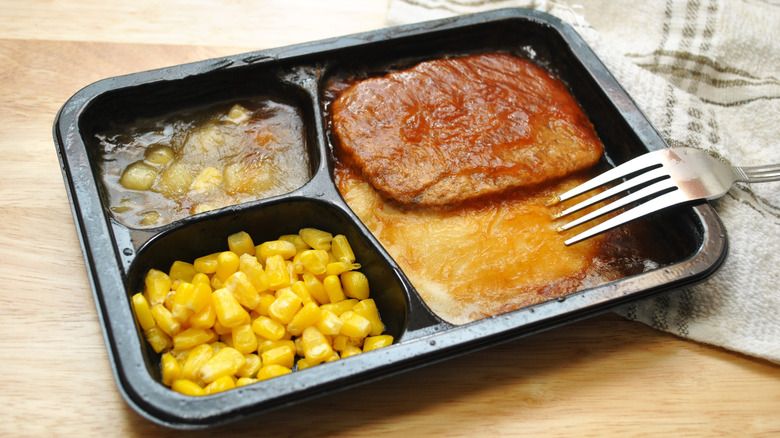
Again, you can probably trace this reaction back to evolutionary psychology. Afterall, a member of the tribe willing and able to go out and hunt a mammoth for the group – at great effort, skill and personal risk – is probably someone worth having around. What’s has all this got to do with AI and marketing, half a mega-annum later?
It all comes back down to effort. Effort is a signifier of care. When we respect and value others enough to put in effort and commitment, those on the receiving end – like all of – are hard-wired to respect and value the gesture in return. This is the evolutionary and psychological basis for trust and the kind of positive sentiment that leads to a willingness to collaborate or exchange goods & services.
In contrast, when something someone offers us looks, feels or is perceived to be low-effort, we instinctively associate it with being low-value and less worthy of consideration.
When I gave my talk at the university of Leeds a couple of weeks ago, we’d just had the Super Bowl the weekend before. Advertising during the Super Bowl has become something of a cultural phenomenon. Enormous effort and expense goes into them – brands take months to make them and can pay well into 6-figures per second of screen time.
Measure these ads on conventional performance metrics and you might come to the conclusion that it’s wasteful vanity. Some of these advertisers are mature, savvy brands though – they’re unlikely to be making such an expensive mistake. They know that this kind of costly signalling has a value. They know that what these ads are really saying is: “we care enough to spend a frankly irresponsible amount of money to entertain you.” They know that it signals conviction and belief in their product. And that it shows the audience the respect of saying “you’re watching the Super Bowl to have a great time and be entertained, and we know we’re just getting in the way of that unless we’re part of the show.So we’ve made the effort”.
It’s signalling of commitment, respect and care.
AI will play a massive place in the future of marketing, advertising, creativity and business. And you should use it – it’s a great tool. But NOT only as a means of reducing effort and expense. Do that, and your brand will go the same way as Kruger et al’s paintings, and that friend who serves microwave meals at dinner parties: less preference, less value.
In the next instalment, Trend #3 in Creativity for 2026, I look at The Return of Value-Add Marketing.